Dreaming about music? I think so. I think writing music is happening in part on a subconscious level. That includes the influence of dreams and memories and experiences from the past. I am usually not writing music for a pre-defined theme - composing for me is a spontaneous act, but I must admit that I prefer the minor scales, which is kind of a scheme I am emotionally obliged to...
Listening is letting go.
My two sons are my most cherished accomplishments.
Music is the second best distraction from this crazy reality.
In the long hiatus I discovered ambient, film scoring and IDM, which still have a huge impact on my sound. Recently I started exploring melodic techno and also a few singer/songwriters.
I started writing music when I was 16, experimenting with the electro/industrial genre. In 1995 I decided to take a break, which lasted 15 years. In 2010 I came back, using modern technology and experimenting with ambient and IDM - and I still do.
I still like my back-catalogue, the 90s-tapes, but they represent the old and harsh LPF12-sound. My sound nowadays is totally different and shows a grown up-version of my project. I feel very comfortable in the ambient genre and I never get tired of finding the right sound for a melancholic or dark soundscape. I became a lover of harmonies and melody over the past years.
LPF12 means Low Pass Filter 12 dB, it's a part of a synth for example. Back then I wanted to use a technical name for my project, but nowadays I would also release under my real name and I'm still thinking about doing so.
I've always recorded my stuff in my creepy cold cellar-studio, but since we're moving soon I have to set it up in a new place, which should be quite exciting. There's surely enough space for new inspirations.
To those about to try music: Write the music only for yourself firstly. When you feel safe with your style: Don't get distracted by the expectations your listeners might have. Surprise yourself by trying out new influences and don't repeat yourself if possible. Write music from your heart and soul.
Technically speaking the VST-technology in combination with old fashioned hardware are my most important musical or artistic discoveries. That really made my comeback in 2010 possible. As a musician nowadays you have endless possibilities to create your sounds and your signature style.
What would you like to try that you have not tried yet?
Learning how to be a better piano-player.
I'd love to meet my musical Idol James Newton Howard and have a look at his studio, maybe writing a cue for a film with him. :)
What is next?
Setting up my new studio and hopefully writing a new album soon.
LPF12 is a solo-project by German artist Sascha Lemon, founded in 1993, creating Electronica. LPF12 released various albums on Ionium Records, Abstrakt Reflections, Crime League, 7MNS Music and Raumklang Music as well as a number of Bandcamp-only releases.
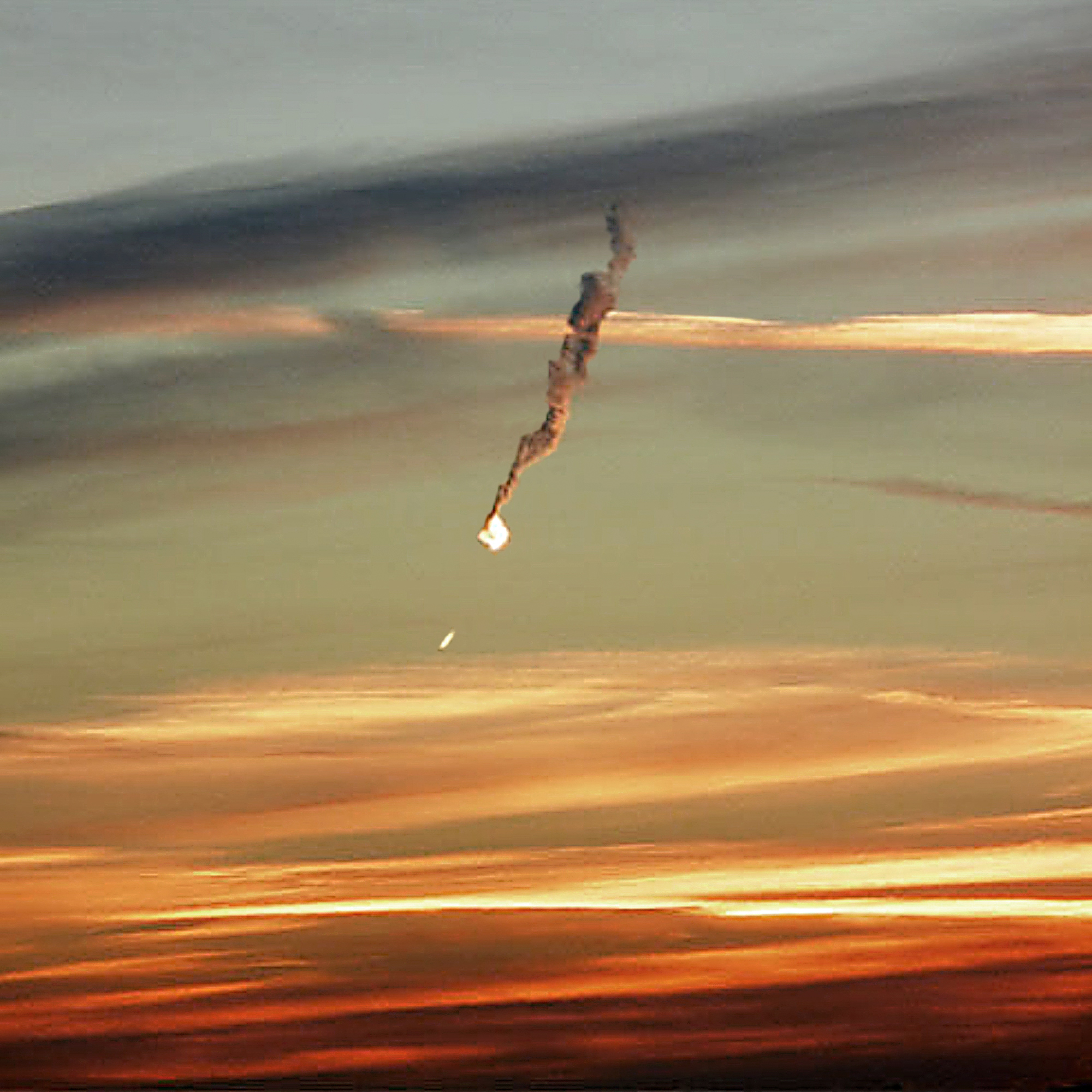
I believe we are enriched in life by interaction with mysteries, even if whimsically or as a thought experiment. Zeroing in on the "unexplained sky burner" allowed me to step into the zone of the unknown in a playful, and mentally necessary way I think.
As an artist, that is how I want to feel every time I experiment with music - that I'm stepping into some unknown adventure or happening upon a mysterious epiphany that beckons being unpacked, but can never be completely unpacked.
Some of the most interesting places I have made my music are a planetarium in France; in front of a mechanically animated dome structure / art piece in a vacant building in downtown LA; in a vacant retail space in Antwerp, Belgium; in a historic art space in Seattle which had been a creepy "home for wayward girls" a long time ago.
My advice to someone starting on the music path:
Avoid genre orthodoxy and mimicking your idols who came before.
Gear doesn't matter, it's your relationship to the instrument.
Do what you feel.
Imagine yourself on the edge of a world of infinite possibilities.
Music is the first language, or perhaps second depending on if you think dance came first.
Listening is the most important part of music making.
My most important musical or artistic discoveries?
No matter what I try to do to outsmart myself...wherever I go, there I am.
My most cherished accomplishment?
Not quitting music, even when the worst parts of me thought there was every reason to do so.
I have several unfinished albums very near completion. I'm looking ahead as far as wrapping them, and I hope everything beyond that is a complete surprise out of left field.
STRATEGY is me (Paul Dickow), a musician, DJ, producer, and record label operator based in Portland, Oregon. In keeping with the tradition of aliases in house, techno, disco, etc. I adopted the pseudonym Strategy in 1999, to represent my solo production work, and first officially released under that name in 2003. There are numerous other artists called "Strategy" out there, with whom I am happy to share the name. I also used the alias Extinct briefly, but have been pretty consistent about using one pseudonym. Go to the Discography and Remixography to learn about the labels and records I have worked with/on.
I also play in the bands Sound People, Smoke and Mirrors, Fontanelle, Nudge, and One Human Minute, and I previously played in the bands Emergency, The Cold War, Two Noises, and the Fracture Line.
Together with David Chandler I run the Community Library label established in 2005. Together we had a monthly musical event called Community Library where each DJ set was based around specific themes. We'd also have live performers and show movies and such. While the DJ night gradually morphed into the record label, we both still DJ actively together and separately which you can learn about here.
It takes 8 years to finish, so many memories are layered, blurred and convoluted that I don’t clearly remember what was the start point.
what does Stella Epoca mean?
- the new era of stars
- stardust candies
- birth of new stars
i hope it will become a sounding amulet for the future life of listeners.
i hope people will enjoy to create their own constellations with the sounding stories.
My advice to someone starting on the music path:
believe yourself and dream. move hands (for programming, scoring, software operations, instruments playing or whatever) more time than in front of google or SNS. not to decide your limitation by yourself.
these are the advices which I usually say for my Japanese students. But, I think it may change for the cultural background (and mentality, the way of thinking of the person etc).
Human beings have many unique characteristics compared with other creatures here on Earth, including the use of speech, story telling, and the preservation of history. What is music?
from the view point of the relationship with creatures, music is the possibility to communicate with them.
What is listening?
opening your ears and body to the world.
Are you able to bring music back from your nocturnal dreams?
yes. actually, it was more than music - something like the source of music which is not able to express with the five senses of human beings of nowadays.
Where do you dream of going (vacation, tour, exploration, by time machine, etc)?
Tibet, South America, Ice Land, Milky Way (both today and ancient time)
What would you like to try that you have not tried yet?
try to go to meet Japanese dolphins in the ocean. and maybe try to learn dolphin songs from them.
P.S. my favorite Japanese pop song when i was 10 years old was “DOLPHIN SONG” by Flipper’s Guitar.
i think because the track is with many samplings, it is not on Spotify. but here is the link of the artist page on Spotify.
Sawako is a sound sculptor, a timeline-based artist and a signal alchemist who understands the value of dynamics and the power of silence. Once through the processor named Sawako, subtle fragments in everyday life float in space vividly with a digital yet organic texture. She weaves the poetic soundscape to connect and fuse dream and awake, urban and nature, real and virtual.
Sawako released her albums from 12k (USA), and/OAR (USA), Schole (Japan), BASKARU (France) and Anticipate Recordings (USA). She had collaborated or improvised with Taylor Deupree, HYPO, Ryan Francesconi, Toshimaru Nakamura, Andrew Deutsch, Kenneth Kirschner, Daisuke Miyatani, Kyoka, AOKI Hayato, ARAKI Shin, Haruka Nakamura, Ryuichi Sakamoto among others.
Her tracks were used in “Treelines” the documentary by Patagonia Film and “GEEK GIRLS” the documentary by Gina Hara, and she created the playlist based on the theme of Earth Day for Aesop. Alfred and Kosei Komatsu as well as for the fashion shows of Support Surface.Her unique sonic world has been called “post romantic sound” by Boston's Weekly Dig.
She has performed internationally as an audio and/or visual artist in MUTEK (Canada): Warm Up at PS1, Armory Show, Diapason, Le Poisson Rouge, Tonic, Diapason, Monkey Town, Issue Project Room, Roulette, World Financial Center Winter Garden UCLA Hammer Museum (LA); OFFF Festival (Lisbon); MACBA, CosmoCaixa, Sonar Festival (Spain); Glade Festival, Resonance FM, ICA (UK) ; Batofar (Paris); m12(Berlin); Offsite, Super Delux, Bullets, gift_lab, Vacant, Apple Store (Japan).
Her works are mentioned in “Listening through the Noise : The Aesthetics of Experimental Electronic Music” (Oxford University Press) by Joanna Demers, “Handmade Electronic Music” (Routledge) by Nicolas Collins and “Transmission Arts : Artists and Airwaves” (PAJ Publications ) by Galen Joseph-Hunter and others. Her work has been featured in The Wire (UK), Blow Up (Italy), Improvised Music from Japan (Japan), NY Art (US), e/i magazine (US), DEBUG (Germany), Go MAG (Spain), GAFFA (Denmark) among others.
Sawako obtained a Master's degree in Interactive Telecommunications from ITP New York University where she studied Networked Expression, Algorithmic Composition, Physical Computing, Ambient Information, Post Linear Narrative and Audio/Visual Studies. She received a BA from the Environmental Information Department at Keio University, SFC , Japan. Since 2019, she is the part-time teacher of Ferris University, Yokohama Japan, where she teaches Media Art and Computer Music for women.
Born in Nagoya, Japan, studying the classical piano and Japanese Nohgaku Theater when she was a child.
Music has always been a huge part of my life. I began learning to play the piano when I was just a little lad. My parents weren’t musical themselves but they saw the value of having my sister and I learn an instrument. I can’t thank them enough! Growing up I played in school bands, personal rock bands, and even an orchestra. When it came time to choose a life path, funny enough though I actually headed down the road to becoming an engineer (like math and science engineer, not audio engineer). After a few years I realized that I had to make music more than a hobby or I might never be happy. So after a yearlong audio production program I got hooked up with a music publishing company in Toronto called Bedtracks. I began writing music for TV shows, documentaries, and advertisements (and still do). At some point around 2017, I realized that I had all of this music that I’d written and was proud of but had no way to share it with the world. So initially ‘Music Within’ was born as an avenue to share some of my work, kind of like a portfolio of albums. But it has become much more than that now. It’s another artistic outlet for me to use to write music just for music’s sake. Since starting the project, I’ve put out 10 or so albums and many singles/EPs in between.
“What advice would you give to someone starting on the music path?”
First off, I’d say that you should try to remember that success generally follows an exponential curve. This is going to take time. Have a realistic time frame to achieve your goals so that you don’t give up. Also (this is one that I learned this one from Grant Cardone): set goals that are ten times bigger than what you normally would. It will keep you more motivated and if you fall short of this massive goal, you’ll still accomplish a lot! Oh and try not to be too hard on yourself. I'm still always guilty of comparing myself to people that are 20 years ahead of me, who write beautiful film scores and amazing music and while it can be a good kick in the butt to work hard, make sure not to compare too harshly.
I am proud to say that I just recently hit the milestone of 4 years as a full-time freelance music composer! That’s an accomplishment that means a lot to me.
Truthfully, on a day-to-day basis, I often feel like I’m not making the progress I’d hoped for, that things are moving too slowly, and that I’m stuck in a rut. But, questions like this help me to take a step back from my myopic view, to really appreciate things that I’ve been taking for granted. It’s pretty wild to think that on a monthly basis, there are 50,000 people who listen to my music, or that I have several tracks with over a million plays. From this zoomed out perspective, I feel kind of amazed that since starting on this path, I’ve built up a catalog of over 500 pieces of music (150 or so of which are released under Music Within). I guess I needed a good reminder to not take for granted the fact that I’m supporting myself with my music.
Music is another form of communication and self-expression. It transcends borders and boundaries. Give two people from completely different parts of the world the opportunity and they will be able to make music together without speaking each other’s language or knowing anything about each other. It’s an amazing thing! Music is also an opportunity to take listeners on a guided journey over a period of time. In the same way that an author can transport a reader to a specific place in their mind, so too can music transport listeners. And it can do so without language, which means that music doesn’t have the specificity of language. It is more open-ended and a more personal experience. Basically, music is the best.
True, deep listening is a form of meditation. And it’s definitely my favourite form of meditation. Focusing only on what you’re hearing and staying right there with the music as it develops, it’s a special experience. For someone who spends their days creating music, listening has become something that is synonymous with living.
I definitely do dream about music, whether it’s listening or creating, but I have yet to wake up and remember what I heard or made in the dream. Something to work towards!
Now that Interwoven is released and out there in the world I’m working hard to get it in front of as many people as possible. I’m currently preparing for a few piano performances in the Toronto area to showcase the music. Outside of Music Within, I actually have a number of things on my plate right now. I’m beginning the process of scoring 2 short films - (unrelated to one another). And I’m in the middle of recording the 2nd full-length album with my band, Centuries of Decay. I have a lot of rather technical guitar material to chew through right after I finish writing this. Exciting times!
What would you like to try that you have not tried yet?
“I like to look at it like I’m writing music for films that don’t yet exist, or that may only ever live as unique stories within each listener’s mind,” says McAllister. Naturally he does also compose music for film projects that do exist, most recently co-scoring the documentary film Town of Widows.
Rob is a classically trained pianist with a curiosity and passion for learning new instruments and exploring new sounds. This has fueled the addition of many new sound pallets into his productions. In addition to playing the piano, he is a multi-instrumentalist who plays the guitar, trombone, and accordion to name a few. He is continually writing new music, and loves the creative freedom that composing music on a regular basis provides.
Born and raised in Welland, Ontario, Robert Daniel McAllister studied classical piano for 10 years. During this time, he earned his Grade 8 Piano Certificate and his Grade 2 Music Theory Certificate. Always keen to learn a new instrument, he picked up the trombone in school and later joined the Niagara Youth Orchestra for five years. Additionally, Rob became proficient at playing the guitar and joined many bands over the years. Currently he is the lead guitarist in a metal band called Centuries of Decay.
Rob attended McMaster University and studied Physics, obtaining a B.Sc. (Physics). Realizing there that he needed to pursue his real passion, music, he enrolled and completed the Audio Production Program at the Harris Institute in Toronto. Upon completion, Rob was offered a 6-month internship at The Hive, an established Toronto music studio. This internship focused on audio production and music composition for film and television. This internship was the stepping-stone from which Rob dove headfirst into his career as a music composer.
From that time Rob has been honing his composition skills and growing his personal catalog to approximately 450 pieces of music at the present time. Rob’s music has been featured in advertisements for IKEA, Lexus, Rocky Mountaineer, Holt Renfrew, Huggies, and Power Athletics to name a few. He has written theme songs for television shows, including APTN’s Wild Archaeology, Global’s Decision Canada (Canadian election coverage), A User’s Guide To Cheating Death, and Last Stop Garage. He has provided additional music scoring for Global’s 16x9, and the documentary films Fanomenon and The Drop: Why Young People Don't Vote. He co-scored the full-length documentary entitled Sister Elizabeth: The Strength Of Faith. Most recently, he co-scored the documentary film Town of Widows, which aired on the CBC.
Around 2019 Rob began focusing more of his efforts on finding his own musical voice and developing his project Music Within. Steadily releasing singles, EPs, and albums, the project now contains a collection of about 150 pieces for people to listen on all platforms wherever music is available.
The title Pink Snow comes from the picture I used for the cover, taken by my parents who are doing a lot of high mountain hiking. On the photos you can see a frozen lake and all the snow around is covered with some pink sand from the Sahara desert that is lightly pink. This kind of thing happens once in a while.
Most of those little pieces are jams that I recorded for fun around single electronic instruments with additional effects (a lot of Roland MC-202 with old echo / spring reverb and modular synthesizers). Most of those have been available as video on my Youtube channel until I decided to get those all together into a release.
I used a reel to reel recorder for the first time to master this album, it gives a nice crunch and noisy background to everything and I really like how it turned out.
Electric Voyage Studio
The Electric Voyage Studio is an independent mastering & mixing studio run by Julien Guillot aka Stazma The Junglechrist / Repeat Eater, focused on bringing better sound quality to releases from the underground music scenes of this planet.
The main activity of the studio is mastering. Over the years I have been working with artists such as End.user, Bong-Ra, Voodoom and many more in the Breakcore scene, but also for a lot of less extreme oriented labels such as Brainwaves, Kaometry and my own imprint Concrete Collage.
As a very open minded music listener I've been also working for Rap and Rock bands and I'd be happy to work on anything.
Stazma The Junglechrist
Started in 2008, it is the first and main project from Julien Guillot, started on the super violent and punk end of the Breakcore scene to become more of an experimental mutant breakbeat and "weird core" entity in the past few years.
Concrete Collage is trying to be a modern thinking record label, focused on releasing quality underground electronic musicians, also supplying them with a quality artwork and mastering..
There's a difference between hearing and listening. I think most of us hear a lot of music throughout the day, in the car radio, the grocery stores, elevators, commercials, etc. It probably is becoming more rare these days to actually LISTEN to music, where we're focused on the music, listening to the lyrics, song form, etc. And I'm not judging anybody, because I'm the same way. We have such short attention spans and there's SO MUCH media out there coming at us all the time, it's hard to sit down and focus on listening to something a lot of times. But that's why live concerts are so important these days. Going to a live show forces us to sit down and focus on watching and listening to a something that we paid for; that we got into the car and drove specifically to hear. But it also forces us to break away from the mundane of going through the everyday emotions; forces us to FEEL human again.
A lot of people have assumed I combined the two loves of my life together: beatboxing and saxophone. However, that's not really the case (especially since I've never really ever beatboxed vocally before)! Instead, I had a very normal American music upbringing: playing in concert band and jazz band in high school, and then majoring in classical and jazz saxophone in college. It was only then that I heard various musicians making interesting percussive sounds on their instruments. And never really knowing whether I was more of a classical or jazz or pop saxophonist, I just starting messing around with the instrument. Adding musical things here and there, not knowing where it might lead. Over the years I slowly evolved my playing style, learning to "slap tongue" from contemporary classical saxophone, to hit the instrument from watching fingerstyle guitarists, experimenting with multiphonics from avant garde jazz players, getting my feet involved with stomps from playing the drum set, and even singing while playing since, well...guitarists and pianists do it all the time. Why not on the sax??
(Advice for getting started) Listen to a lot of music and learn particularly the chords of your favorite stuff, by ear preferably. I'm very chord/harmony driven, so I usually start there, coming up with chord progressions that sound good to me. People might find this unusual since I play a very non-chordal instrument, the saxophone, that can only play one note at a time. But maybe that's another reason I play like I do, I'm trying to treat the saxophone like a chordal instrument, like a piano or guitar!
But anyways, I like to improvise around with bass lines and chord progressions until I find something I like. Then I'll add a melody on top, repeating this process for other sections of the song (like verse, chorus, verse, chorus, bridge, etc).
And the most important thing I've learned with composition is, it's NEVER going to be perfect or even as good as your best song, but that's okay! Just keep writing in whatever system works for you. I often struggle with this perfectionist attitude, and so I often have to absolutely force myself to finish a darn song! I even started a Twitch channel where I would write a song in 90 minutes, and it wouldn't matter what came out on the other end, as long as I finished it!
As much as people say it, it's totally true: Only pursue music as a profession if it totally consumes your life; if it's all you can imagine doing. When you're young, explore it! Have fun with it! But when it's time to pick a career, just know that it's NOT easy. Even someone like me who has millions of Youtube videos and has played in over 30 countries and all 50 states; it's still a daily struggle to keep things moving forward constantly.
But I do think there is a secret to success; maybe even guaranteed success. SUSTAIN IT! Millions of people have sought out a career in music but only a few make it, solely because they stuck with it, through the inspired and (mostly) uninspired times. So the million dollar question, I think, becomes 'How do you sustain a career?' I think it takes 3 things: Stay healthy, keep things challenging, and keep things fun! If you can keep these three things up, you won't get bored, you'll keep growing, and you'll be able to physically keep going!
I don't tend to follow the news so much just because it is just so heavy. I hear it through my husband,
he does follow it. We know there is so much tragedy out there, all things imaginable, and yet sometimes
it does not seem real because we are not experiencing it first hand or seeing it right in front of us. Some
things that pop out though, with the teens and the children and all of these things that are happening in
schools, violence and shootings, and depression, suicide, its just unreal, it feels like "how did we get to
this place? what is driving our youth to this place of such deep suffering, what are we doing wrong?" It is not their fault, especially the young ones, they are just born into this world. They are shown what they are shown, they have the life that they have. Some are less fortunate than others, some may have some emotional imbalance. We need to really give more attention to the youth and their internal struggles, and look at what we are doing as adults in our society that is for children. It was really hitting me hard, thinking we just can't continue like this. The album COMPASSION came from that place, caring for others, looking out for our children, looking out for the youth. For me, His Holiness the Dalai Lama is someone very special, everything for him is about love and compassion. Just recently he had announced this new program where they want to bring curriculum into the schools called Seeing Learning (https://seelearning.emory.edu) where they can teach about compassion, and empathy, and relationships with one another, teaching how to communicate to one another, understanding our feelings. You know, this whole new curriculum for some schools being added, teaching kids to connect to their feelings, and to other kids with feelings, and you know we really need that!
We are teaching our kids math and science and technology and history and all of that, but we are not
teaching them to connect to who they are, and to each other. We are not teaching them compassion.
And that is actually human nature, we want to connect. So this album really reflects all of these ideas
and feelings that I had for a long time and it was really a dedication to His Holiness and the dedication
and the work that he is doing, and to all people, all beings. Just trying to collect more of that into our
consciousness.
Music is the connection to the source, it is the sound vibration, it is the direct connection to source, the
direct connection to God, the direct connection to your higher self. It is the sweetness in everything. It is
like dessert after dinner (laughter), music is sweetness!
For me what it means to be an artist really finding what your message is, and in the beginning when we
are so young we are just creating something innate, something natural just happens, you kind of go with
what you are loving and feeling connected to. For me when I was younger I just loved music, I just loved
it! I was drawn to it and I loved the human voice, I loved hearing all the nuances of what the voice does to
create such beauty. Eventually I felt like I can see the mechanism inside the body, the throat and the
mouth and the breath. For me that was something I became very fascinated with. As I grew up and had
my own life experiences, and went through all that I went through, when I finally kind of woke up and had
a stronger consciousness I knew that being an artist was a huge responsibility, if I wanted to take it
seriously and really go forth with it, because as we see music, visuals, film, all of these sensory
stimulating things, it is powerful. It affects our emotions, our thoughts, our ideas about beings, we are so
sensitive to all of these. Being an artist is a big responsibility. What we decide to put out in the world will
somehow affect one person, or many people. I really try to be clear about what my message is, and
really focus on having an impactful message, one that can really affect someone positively, bring some
light into their world, inspiration, upliftment. That is just MY goal in the work that I do. As an artist I feel
like when we get to that point we ask ourselves what is our message, what do we want to say to the
world and ask ourselves does our message help others? And if it doesn't, how do we feel about that?
Is it just for us, or for others, and do we want to choose a message that will impact the world in a positive way, because we have to know that it will impact at least just one person in this world that will hear it or
see it or experience it. So, as an artist I think it is important just to really be responsible, and clear.
When I look back at my childhood there were no accidents, everything was perfection up to this point, all
the positive aspects, all the negative aspects were all good at the end. I am Vietnamese and coming from
a Vietnamese family, you don't, especially from my parent's generation, immigrating from Vietnam after
the war, you know, their idea was not "Let's raise musician children." No, we need to have better foundations,
stability, we don't want our children to suffer and struggle like we did, all out of love. But even though that was
their feeling initially and for many years, when I was really young one day my dad came home from work,
and he brought home a VHS and he said "Oh, my co-workers said that I should bring this home and let you
kids watch this. His kids really loved it” He popped it in, and I must have been about six, and he pops it in
and it was "The Sound of Music!" And you know, if my little soul came into this world to become a musician
and a singer, then that was like heaven to my ears and heart and mind, I watched that VHS over and over
nonstop for days and weeks and learned every song and every nuance and every gesture. I really absorbed
that music, and it was the first time I heard the voice used in that way. I was so drawn to it, and I think that
was really the beginning, the beginning of the whole world of music and discovery. From that point on I
remember going to school and just wanting to sing and get people together to sing. I was probably trying
to copy "The Sound of Music" with the kids. I asked my parents and enrolled in violin and singing and choir,
since I was six years old through to adulthood, I was in and never left, I was so so so inspired by music.
My parents thought "Oh, she just loves music, and it is one of her hobbies, great! At least she is happy,
but she is going to be a doctor or a lawyer." And so I did, I went to college and I was a biology major and
I was minoring in music, and I took voice lessons for the first time when I was 18, and my teacher looked
at me and said "Look, you have something, if you really want to pursue it, it is one or the other." And so for
a year I just kept minoring in music and then finally I couldn't resist it, I dropped out of biology and went
straight into music, and my parents, you know it took them a while to really accept it. I ended up getting
my master's degree in voice performance, and they finally said "Okay, this is what she wants to do."
Now they are completely supportive and have been so happy and there is nothing else in the world that
I should be doing, so it is all good! And it brought them joy, and it brought a lot of other people joy, they
see that "she has been called to do it."
It is the hardest thing to do, to pursue a career in the arts.
I teach Yoga as well, I teach Kundalini Yoga, a very powerful practice, a very beautiful practice, life changing.
It really changed my life and brought me a new perspective, it made things very clear to me. I could not NOT
share it with others. So in the midst of the world of music I share Kundalini Yoga especially with the
Vietnamese community since the last almost ten years now.
My father's side, they are Buddhists, my mother's side they are Catholic. Both sides are not just sort of
dabbling in it, they are hard core in their beliefs and their practice. So honestly, I am really grateful for that
because I grew up going to the temple on one day and then the church the next day. You know it is written
and taught, it is really important that children up to the age of eleven are extremely sensitive and open, no
matter what they choose in their adult life, whatever spirituality they choose it doesn't matter, as long as we
nurture them in their young life, expose them to spirituality, open them up to it. I really had that growing up,
I really didn't follow any of it at all until I became an adult, I didn't feel that it was really "it" yet, until I
discovered Tibetan Buddhism. I remember sitting in my first meditation class, it was that moment when
everything you are hearing, you have been trying to find those words to say, to explain, I really felt like I
came home to something that my heart knew, my soul knew, it resonated so deeply, it made so much
sense to me, and then I just could not stop wanting to learn more and more and more.
Sound Bath Meditation
Nowadays a sound bath is so popular, it is as available as a Yoga class now. It is the most healing, most
beautiful experience. You basically are in a room, and lying down, and nowadays it has evolved a bit since
a decade ago that I remember from when I first started going. Basically you are in a beautiful space, you
are asked to relax and the instruments that can be used are gongs, from large sizes to small and it could
be crystal singing bowls, Tibetan bowls, these beautiful sound creating instruments of all different shapes
and sizes, even a vocalist can be there. The people who are playing these instruments are usually trained
and they are hypersensitive to sound, creating sound therapy. When they play it, it is like a deep meditative
experience, bringing these sounds to stimulate the cells of your body, your energy points, really bringing
you to a state of neutrality and relaxation, and we know that when we come to that place of neutrality and
relaxation things can actually move, energy can flow, balance can happen. Some of the scientific things
are for example the gongs, we tend to use the pasi gongs, they are tuned to certain frequencies, a high
frequency and low frequency. It is said that the sound of the gong is the replication of the sound of the
universe. It is like our innate music, it is like the sound that our body and soul is vibrating in all the time.
When we bring that sound onto planet earth, it is like we are coming home again, in that sound current,
which really helps to release a lot of toxicity and stress in the body, it brings a lot of balance. It is a great
thing if you have a busy life and you are super stressed, in a crazy environment all the time. Just surrender
and let someone play these sounds for your body to heal, and your mind to heal. It is guided through
sound, it does not have to have words, although if the practitioner decides to sing or make sound or say
inspiring words. The human voice is an instrument in itself, and it can bring a lot of healing when the
intention of the singer is in the right place and there is that purity.
Actually you will find a lot of recordings of the crystal singing bowls, you will find the gongs, you will find
recordings of all sorts of sound elements. It still works, the frequency is much more powerful with it live,
but with recordings the frequency is still there if it is recorded properly, and it still is very effective.
With my album Compassion I wanted to create that experience, it was inspired by "sound bath." That is
why we brought in crystal singing bowls heard in a lot of the songs, it is very subtle but it does not need
to be loud, just subtly there. I wanted to bring in a choir, and explore rhythmic elements and vocal sounds
that are used for sound healing as well. So all the songs are basically created with the intent of making a
sound bath with these elements of the voice and the crystal singing bowls.
I feel really proud about the album, because it is my fourth album in the last four years. When I recorded
Niguma, where Ardas Bhaee originated from, it was the first album I had recorded in four years, since
my first solo album, Yoga is Love, I needed that break to develop more, to grow, to go deeper in my
spiritual practice. It popped out four years later and now I am making an album a year, I can't stop.
So for the last four albums, for me it felt like growing and finding a sound, finding my voice, finding the
sonic feeling to it. With Compassion I feel like I arrived in a place that feels like home.
The video "Ardas Bhaee"
It is such a great space, the whole production was such a beautiful experience, with the collaborators,
other composers, the orchestra, the choir, it was really really big and at the same time everyone who
was on the production were amazing people, very kind, loving, talented, it was a fun and very rewarding
experience. I feel like the sound, the music really reflects that, so I am really happy with it, it has gotten
a lot of amazing reviews and several rewards already, and you know, just sitting with it now, and living
with it, sharing it as much as possible, getting it out there, letting people experience it, has been great!